Dog Training NYC — Science-Based, PhD-Led, Built for City Life
Force-free behavior work from a dog trainer with a PhD in behavioral neuroscience — the actual science of how dogs learn. Built for real behavior change in real NYC environments.
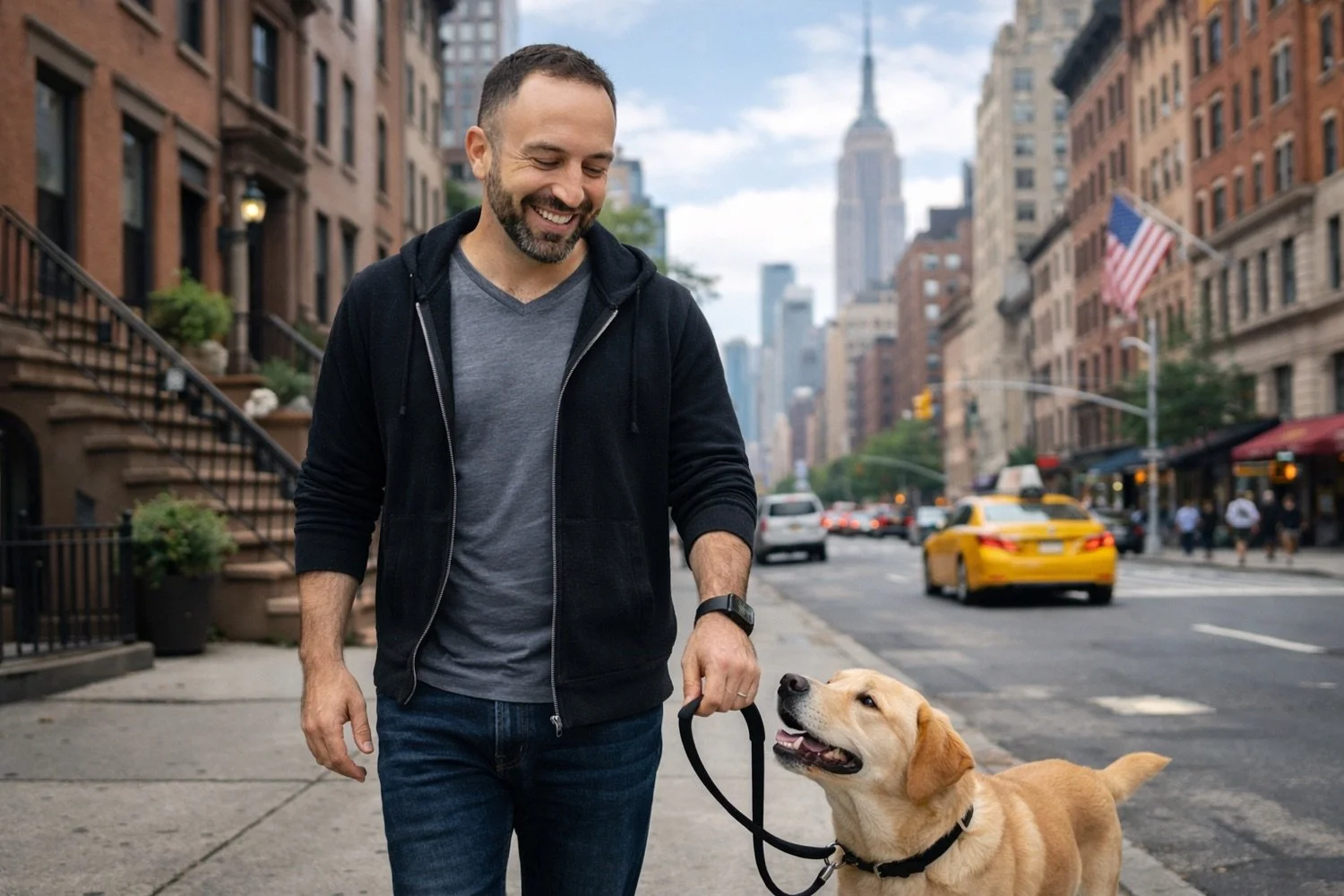
Why NYC Dogs Need Training That Happens in Real City Settings
Training a dog in New York City is just different. Dogs here rarely learn in quiet spaces with predictable routines. They navigate elevators, narrow hallways, crowded sidewalks, delivery carts, loud traffic, building entrances, and close-quarters social pressure every day.
At PJH Dog Training, training is built in the environments where behavior actually happens. That means your dog learns in the context of real city living — where their skills need to hold up.
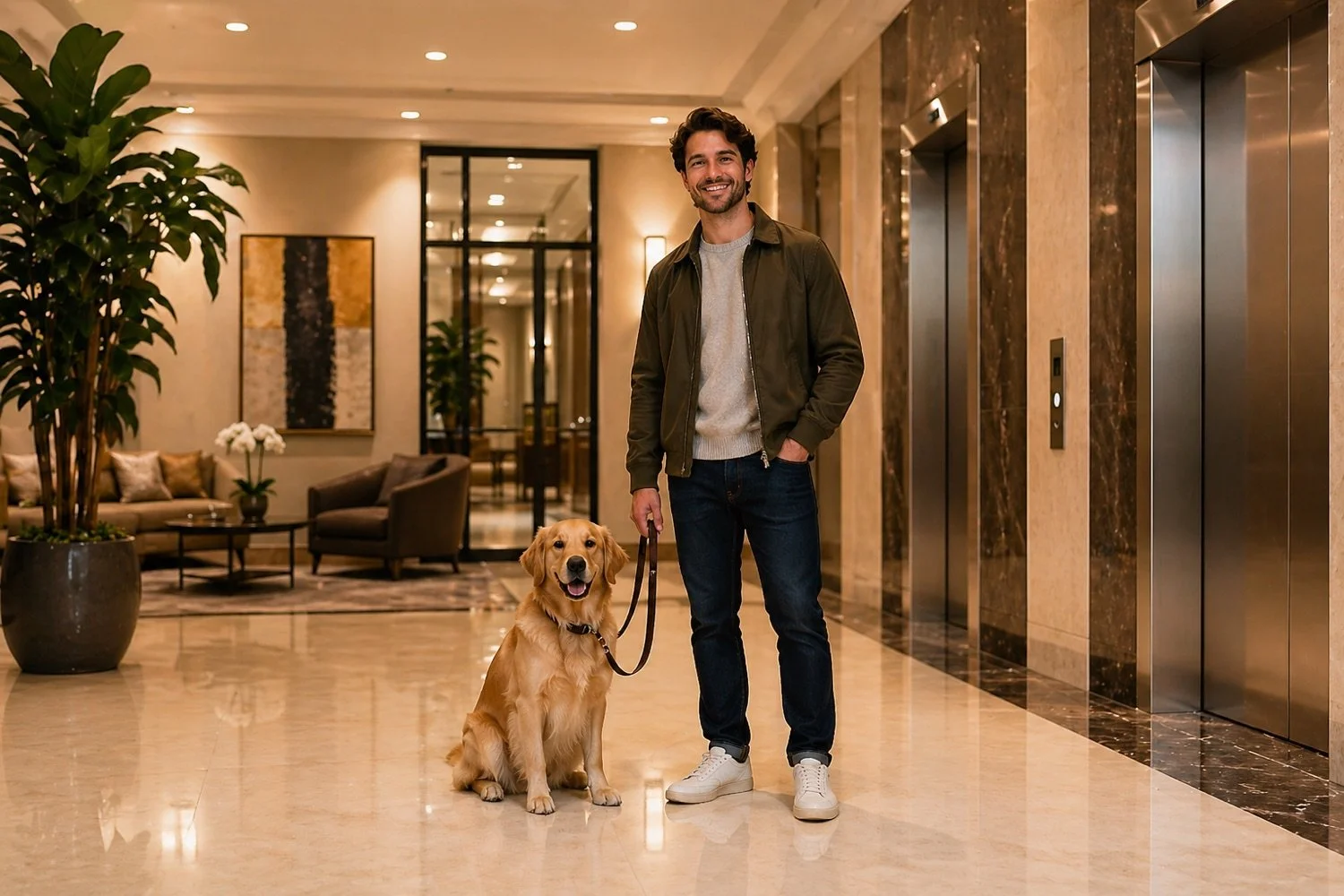
Lobbies. Elevators. Hallways. This is where your dog’s training is tested — and where it actually has to hold up.
What People Usually Need Help With
- 01 Reactive behavior Barking, lunging, freezing, staring, or shutting down around triggers
- 02 Leash walking Pulling, zig-zagging, frustration, and stressful city walks
- 03 Puppy foundations Potty training, biting, socialization, crate routines, and daily structure
- 04 Anxiety & overstimulation Dogs who are not “bad,” just overloaded by their environment
- 05 Apartment challenges Door manners, guest greetings, hallway behavior, and noise sensitivity
- 06 Confidence & enrichment Dogs who need more focus, problem solving, and healthy outlets
Training Services
This page helps you explore dog training services in NYC and choose the best program for your dog. Start with the option that best fits your needs, and we’ll custom tailor the rest accordingly.
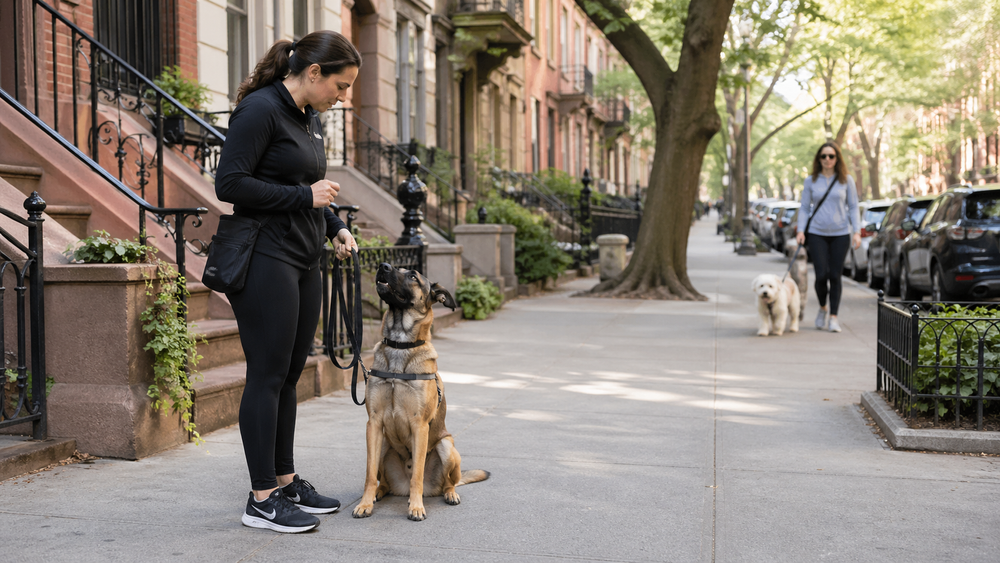
Reactive Dog Training
The work we’re known for. Custom behavior plans for dogs who bark, lunge, freeze, or shut down around other dogs, people, and triggers in dense urban environments — built on emotional regulation, not suppression.
See reactive dog training options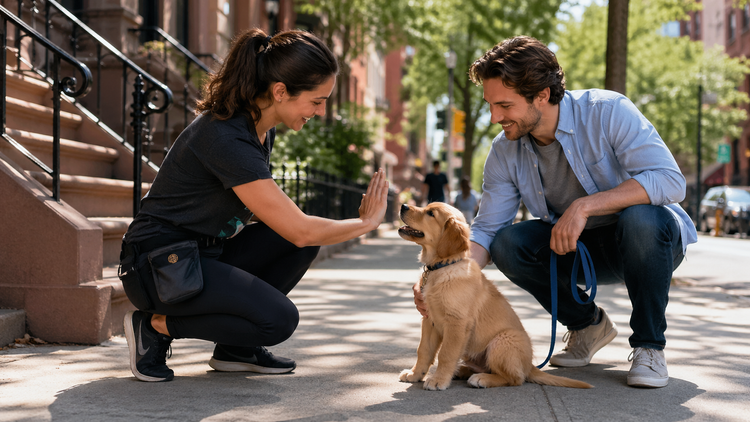
Puppy Training
Potty training, socialization, leash skills, and crate routines for city puppies.
View puppy programs
Private Dog Training
One-on-one training in your home, building, or neighborhood.
Explore in-home sessions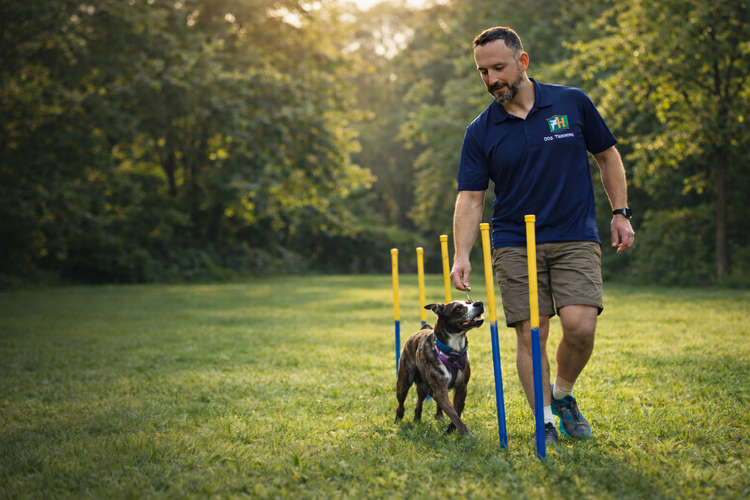
Agility Training
Confidence, body awareness, and handler communication through movement.
See agility classes Puppy agility for young dogs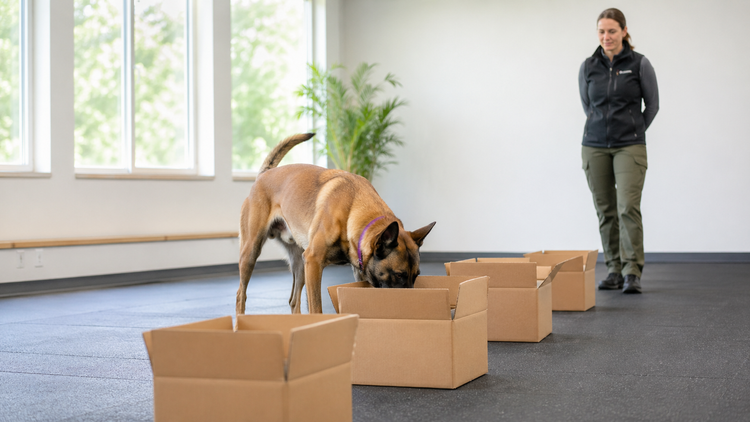
Scent Work
Mental enrichment and problem-solving for anxious or busy-minded dogs.
Explore scent work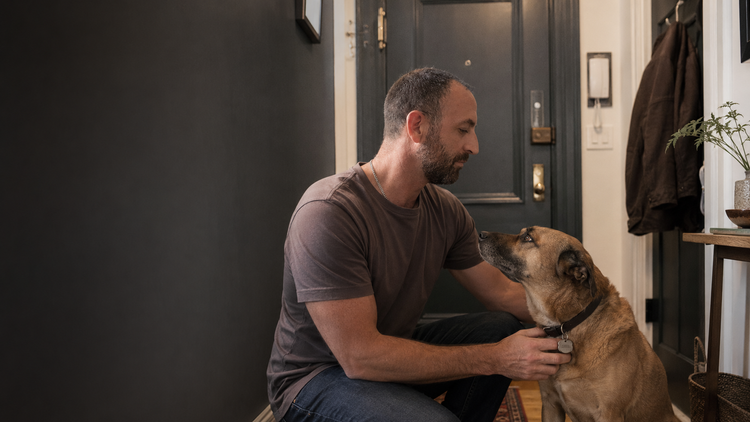
Separation Anxiety
Gradual, force-free help for dogs who panic when left alone — in-home and virtual.
Explore separation anxiety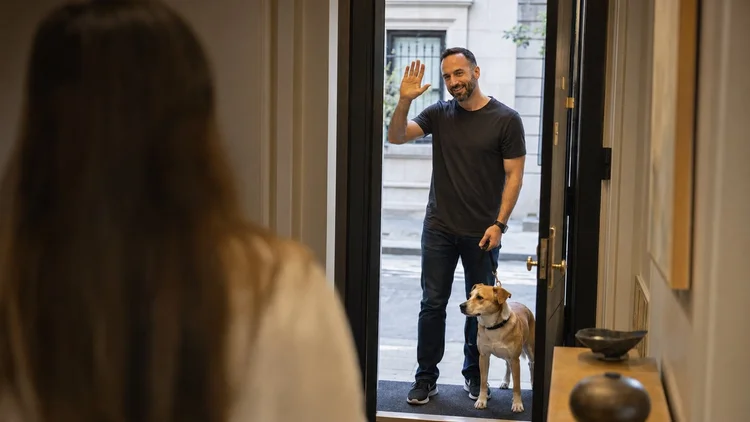
Concierge Dog Training
We handle the training sessions, then transfer the skills to you — built for busy NYC owners.
Explore concierge training
Aggressive Dog Training
Safe, force-free help for biting, growling, snapping, and resource guarding.
Explore aggression trainingTraining That Holds Up Outside the Session
Training is not just about teaching a behavior in the moment. It is about building skills that survive real life: busy sidewalks, surprise triggers, barking in the hallway, guests at the door, or a dog deciding the elevator has become morally offensive.
By combining behavioral science with practical coaching, training focuses on clarity, emotional regulation, reinforcement history, and the specific patterns shaping your dog’s behavior.

Why PJH?
Neuroscience-based. Force-free. Built for actual NYC dogs.
My goal is not to suppress behavior and call it progress. My goal is to support lasting behavior change built on understanding, trust, and skills that fit your dog’s real environment.
- PhD-level background in behavioral neuroscience
- Certified professional dog trainer credentials
- Reward-based, force-free methods only
- Real-world coaching in actual city contexts
- One expert start to finish — never handed to a junior trainer
Why NYC Dog Owners Stick With PJH
“We were near eviction because of his barking and leash pulling — Pepe’s kind, effective approach saved us. Otis is happier and calmer, and I’m less stressed.”
“We’ve been doing private lessons since bringing home our new puppy — he’s the best! Attentive, hands-on, and our pup adores him.”
“Our rescue mix, Nomi, made huge progress through positive reinforcement. His weekly structure keeps us improving — Pepe is magic.”
Dog Training Manhattan & Across NYC Neighborhoods
PJH Dog Training works with dog owners across New York City, with a focus on dog training in Manhattan and its neighborhoods. Training happens in your actual environment — your building, your block, your park.
New York City
Dog training across the five boroughs, designed for urban environments.
View all NYC services → BoroughManhattan
In-home behavior modification for Manhattan dogs, apartments, and neighborhoods.
View Manhattan page → NeighborhoodUpper West Side
Reactive dog training near Riverside Park, Central Park West, and UWS apartment buildings.
View UWS page → BoroughBrooklyn
Park Slope, Williamsburg, Brooklyn Heights, DUMBO — dense sidewalks and high dog-to-space ratios.
View Brooklyn page → BoroughQueens
Astoria, Long Island City, Forest Hills — residential density and busy transit corridors.
View Queens page →Common Questions About Dog Training in NYC
How do I choose a dog trainer in NYC?
Start with credentials and methods. Ask whether the trainer holds an independent certification such as CPDT-KA, and ask directly what happens when your dog gets something wrong — a force-free trainer will answer that plainly.
Then ask where the training actually happens. Dog trainers in NYC who work only in a facility can miss the lobby, elevator, and sidewalk moments where city behavior really breaks down. At PJH you work with Pepe Hernandez, PhD, CPDT-KA in your own building and on your own block.
What makes PJH different from other dog trainers in NYC?
Two things. The first is background: Pepe holds a PhD in behavioral neuroscience alongside his CPDT-KA certification, so plans are built on how learning and fear actually work in the brain rather than on tradition or dominance ideas.
The second is continuity. Many dog trainers in NYC operate as agencies and assign whoever is free that week. Every PJH session is taught by Pepe himself, in the environment where the behavior happens.
How do I get started with dog training?
The best place to start is a consultation. That allows us to evaluate your dog, your environment, and your goals so we can recommend the most effective training approach from the beginning.
Do you train dogs in apartments and busy NYC environments?
Yes. Training is designed specifically for New York City living, including apartments, hallways, elevators, sidewalks, and parks. The goal is to improve behavior where it actually matters, not just in controlled settings.
What kinds of behavior issues can training help with?
Training can address common challenges such as leash pulling, barking, jumping, lack of focus, overexcitement, difficulty settling, and behavior problems that show up in stimulating environments.
Do you use positive reinforcement training?
Yes. Training is force-free and reward-based, using modern, evidence-based methods to build reliable behavior without intimidation or unnecessary stress.
Is training customized for each dog?
Yes. Every dog has a different temperament, learning history, and environment. Training plans are tailored to each dog rather than using a one-size-fits-all approach.
How do I know what type of training my dog needs?
That depends on your dog’s behavior, goals, and environment. Some dogs benefit from private training, while others do well in structured group settings. A consultation helps determine the best path forward.
Is a consultation required before training can begin?
In most cases, yes. A virtual or in-person consultation is typically the first step so we can assess your dog, your environment, and your goals before starting training.
Some services do not require a consultation. For example, agility and scent work classes can be joined directly unless your dog is reactive or needs additional support.
If you're unsure, feel free to reach out or book a consultation and we’ll guide you toward the best starting point.
Start With a Consultation
Every dog is different. Every environment is different. The consultation is where we figure out what is really going on and what kind of training makes the most sense next.